
Uncategorized
The Reflection Frame Kickstarter Story: How the ‘Wire-Free Digital Photo Print’ Was Born
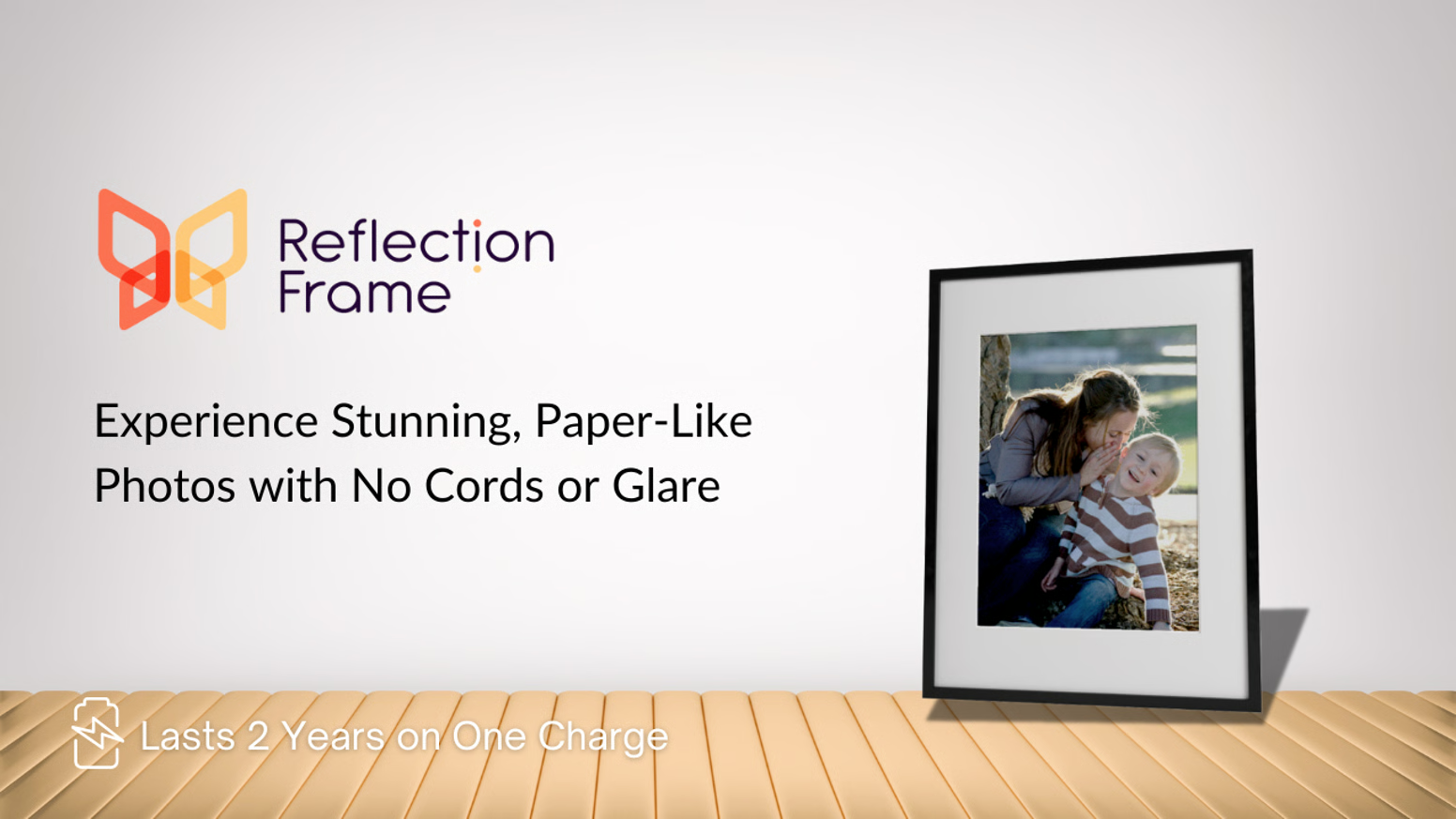
Most digital picture frames solve one problem – a picture on the wall – but create two new ones: wires and the ‘screen feel’. A wire means the frame can only be placed where there’s an outlet, and wires on a wall or shelf are immediately noticeable. A typical LCD screen, however, means constant glow and reflections, which make photos feel more like just another screen than a real picture frame.
The Reflection Frame was born precisely from this frustration: why can’t a photo at home look like it’s on paper? The company went to Kickstarter with the idea of proving that people desire a calmer, print-like alternative.
1) Problem #1: Why Does This Frame Have to Be Next to an Outlet?
 The central ‘aha’ moment of the Kickstarter story was simple: a picture frame should be placeable like a real picture frame. On a table, on a wall, on a shelf, and if needed, from one room to another, without having to think about the nearest outlet, hiding cables, or cable channels.
Reflection Frame took a different approach: wireless use with a rechargeable battery designed to last a very long time, because energy is primarily consumed only when you change the picture. This means up to 2 years on a single charge, with approximately 2000 picture updates during that time.
Practical bonus: even if the battery eventually runs out, the last picture remains on the screen (ePaper logic), thus avoiding the black screen effect that many digital frames have.
2) Problem #2: LCD Turns a Photo into Just Another Glowing Screen
Another starting point: photos are emotion, not a screen. A classic LCD glows in the dark, reflects in bright light, strains the eyes, and makes colors ‘digital’.
The Reflection Frame’s platform is E Ink Spectra 6 ePaper – the same paper-like technology family as e-readers, but in color. The result is a matte, non-backlit image with minimal reflection, which feels more like a printed photo than a screen.
It’s also important to manage expectations here: ePaper is not ‘OLED’. It is designed for a calm, natural, wall-mounted visual, not for video or a bright slideshow. 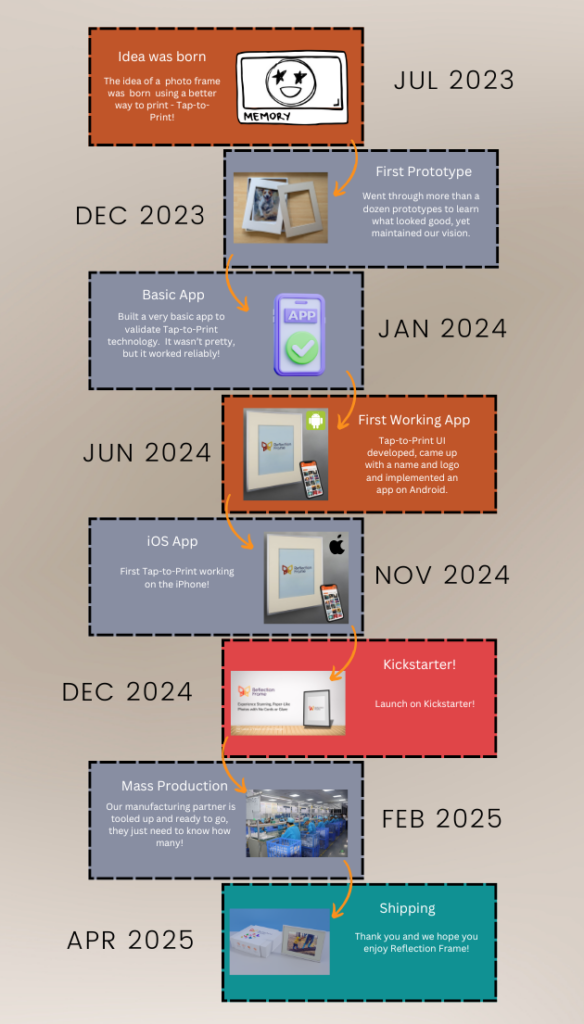
3) Problem #3: Why Does Changing a Picture Have to Be an IT Project?
The third major barrier with digital frames is setup: Wi-Fi, accounts, cloud, passwords, apps, permissions, and ultimately, the frame often remains in an off state at parents’ homes.
With Reflection Frame, this was discarded with a ‘tap-to-print’ approach. You select a picture from the app and place your phone on the frame – the picture is ‘printed’ onto the screen. The connection uses NFC logic, meaning no complicated Wi-Fi/Bluetooth setup is required.
Privacy is also important; pictures can remain on your phone and don’t necessarily have to be uploaded to the cloud.
4) ‘Endless Gallery’: The Frame as a Home Mini-Gallery
The Kickstarter campaign also highlighted the idea that the frame isn’t just for family photos. The app provides access to a curated image gallery and art, which can be used for free and changed according to the room’s mood.
6) Environmental Aspect: Long Lifespan and Very Low Energy Consumption
Sustainability is also a key principle: ePaper has very low energy consumption, the product is designed for a long lifespan, and recyclable packaging is also used.
From April 2025, the product will be officially on sale and available in Estonia from the beginning of 2026.